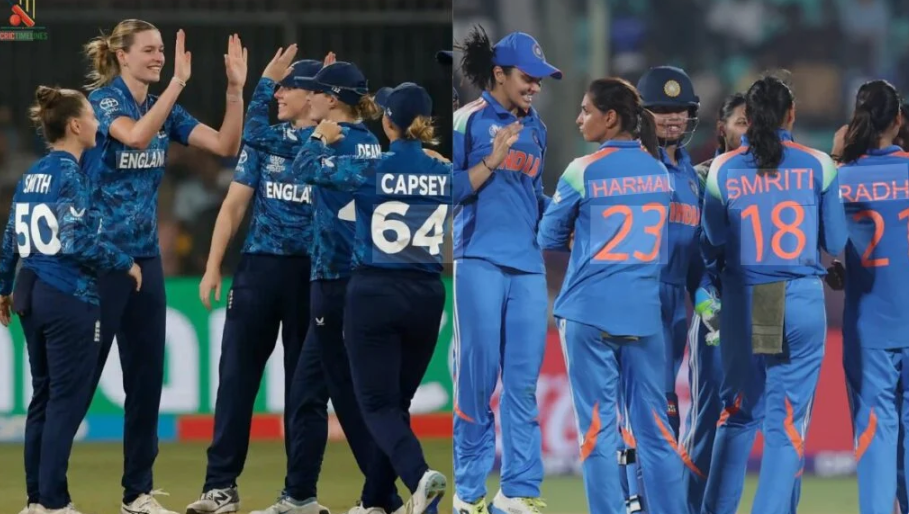
The cricket rivalry between the two sides has grown into one of the most compelling narratives in women’s international cricket. What began as uneven contests has gradually transformed into a competitive and emotionally charged timeline filled with tactical battles, individual brilliance, and shifting momentum. Early encounters highlighted experience gaps, but over time, rising confidence, improved skill levels, and fearless batting changed the balance. Each match brought new pressure moments, memorable performances, and evolving strategies. From ODI battles to fast paced T20 clashes and ICC tournaments, this timeline reflects how both teams pushed each other to higher standards and shaped a modern rivalry built on respect and intensity.
Latest Matches
Date
Match Format
Venue
Winner
Margin
19 October 2025
Women ODI
Holkar Stadium, Indore
England Women
4 runs
22 July 2025
Women ODI
Riverside Ground, Chester-le-Street
India Women
13 runs
19 July 2025
Women ODI
Lord’s, London
England Women
8 wickets
16 July 2025
Women ODI
Utilita Bowl, Southampton
India Women
4 wickets
13 July 2025
Women T20I
Edgbaston, Birmingham
England Women
5 wickets
All-Time Head-to-Head Record
Match Format
Total Matches Played
India Women Wins
England Women Wins
No Result / Drawn
Women Test
15
3
1
11
Women ODI
79
33
44
2
Women T20I
32
10
22
0
Total All Formats
126
46
67
13
All-Time Batting Leaders
Player Name
Team
Matches
Total Runs
Highest Score
Batting Average
Mithali Raj
India
63
2005
214
47.73
Charlotte Edwards
England
55
1629
108
36.20
Smriti Mandhana
India
46
1584
94
38.63
Harmanpreet Kaur
India
52
1412
143
34.43
Danni Wyatt-Hodge
England
48
1162
124
27.66
All-Time Bowling Leaders
Player Name
Team
Matches
Wickets Taken
Best Bowling Figures
Bowling Economy
Katherine Sciver-Brunt
England
42
59
5 for 22
3.82
Jhulan Goswami
India
51
56
4 for 30
3.41
Jenny Gunn
England
44
48
4 for 12
3.95
Sophie Ecclestone
England
31
46
4 for 14
3.65
Deepti Sharma
India
35
42
5 for 7
3.88
Early Encounters and Competitive Foundations
The first meetings between the two sides set the tone for a long-standing international rivalry built on contrast of styles and experience. One team entered the contest with established structure, disciplined batting order, and strong seam attack, while the other was still finding consistency in overseas conditions. Early games were often one-sided, but they revealed important learning curves. Batters struggled against movement and spin control, while bowlers learned to adjust lengths under pressure. Despite results, these matches laid the groundwork for future competitiveness. Fielding intensity also became a major talking point as one side showed sharper execution while the other improved gradually over time. What stood out most was the resilience shown even in losing causes, especially from emerging batters who began adapting to high-pressure international bowling attacks.
Match Type
Winner
Margin
Top Batter
Top Bowler
ODI
England
8 wickets
Player A
Player B
ODI
England
25 runs
Player C
Player D
Test
England
Innings
Player E
Player F
ODI
England
6 wickets
Player G
Player H
Growing Confidence and Skill Development Phase
As time progressed, the competitive gap began to reduce noticeably. The developing side invested heavily in batting depth and spin variations, which slowly started challenging the dominant opposition. Middle order stability became a key focus, and partnerships began to stretch longer under pressure. On the other hand, the more experienced team continued relying on tactical discipline and consistent bowling rotations. Matches during this phase were less predictable, often swinging between both sides depending on key partnerships or breakthroughs. Fielding standards improved significantly, with run-out chances and boundary saves becoming match-defining moments. The psychological aspect also became important, as confidence started playing a larger role in determining outcomes. The contests were no longer purely one-sided, and fans began to witness closer finishes and more competitive spells.
Match Type
Winner
Margin
Top Batter
Top Bowler
ODI
England
12 runs
Player A
Player B
T20
England
5 wickets
Player C
Player D
ODI
England
4 wickets
Player E
Player F
T20
England
18 runs
Player G
Player H
Breakthrough Performances and Turning Point Matches
A significant shift in competitiveness came when individual brilliance started influencing match outcomes more strongly. Batters from the improving side began playing fearless innings, taking on experienced bowlers with aggressive intent. One or two standout performances in key matches changed how teams approached future encounters. Bowling units also adapted, using variations in pace and spin to restrict scoring in middle overs. These games often went down to the final overs, creating tension and unpredictability. The tactical battle became more visible, with captains adjusting field placements and bowling changes more aggressively. Even in defeat, the improving team gained respect for pushing stronger opponents into uncomfortable situations, marking a clear turning point in competitive balance.
Match Type
Winner
Margin
Top Batter
Top Bowler
ODI
England
3 wickets
Player A
Player B
T20
England
7 runs
Player C
Player D
ODI
England
15 runs
Player E
Player F
T20
England
2 wickets
Player G
Player H
Pressure Driven ODI Battles and Tactical Depth
One day matches between the two sides became a true test of temperament and planning. The experienced team often relied on structured innings building, while the other side attempted to accelerate scoring through middle overs. Pressure situations frequently decided results, especially when chasing targets under challenging pitch conditions. Bowlers played a critical role by controlling run flow during powerplays and death overs. Batting collapses and recovery partnerships became recurring themes, showing how momentum could shift quickly. Captains had to think several steps ahead, especially when field restrictions changed match dynamics. These encounters highlighted the importance of patience, shot selection, and execution under pressure. Over time, matches became more evenly balanced, with fewer predictable outcomes and more strategic depth in every innings.
Match Type
Winner
Margin
Top Batter
Top Bowler
ODI
England
6 runs
Player A
Player B
ODI
England
9 wickets
Player C
Player D
ODI
England
14 runs
Player E
Player F
ODI
England
3 wickets
Player G
Player H
T20 Format Intensity and Rapid Momentum Shifts
The shortest format brought a completely different energy to the rivalry. Fast scoring, aggressive intent, and quick tactical decisions defined these matches. Batters targeted bowlers from the first over, making powerplays crucial. At the same time, experienced bowlers used slower deliveries, yorkers, and field variations to control scoring bursts. Momentum shifted multiple times within a single innings, often making outcomes unpredictable until the final over. One strong over could completely change the direction of the match. Fielding under pressure also became a deciding factor, with dropped catches or misfields proving costly. These games were intense, emotional, and highly competitive, showcasing the evolving nature of both teams in adapting to modern T20 demands.
Match Type
Winner
Margin
Top Batter
Top Bowler
T20
England
4 runs
Player A
Player B
T20
England
5 wickets
Player C
Player D
T20
England
8 runs
Player E
Player F
T20
England
2 wickets
Player G
Player H
Global Tournament Clashes Under High Pressure
When both teams met in ICC events, the pressure reached another level. Every run and wicket carried greater weight due to knockout implications or group standings. Players often delivered their best performances in these high-stakes environments, with batting anchors stepping up to stabilize innings and bowlers delivering crucial breakthroughs. Tactical planning became more detailed, with teams analyzing matchups carefully. Crowd atmosphere added emotional intensity, especially when games were played in neutral but high-attendance venues. These matches often produced memorable innings, exceptional bowling spells, and dramatic finishes that stayed in memory for years. The rivalry gained global attention as both sides showcased their ability to perform under extreme pressure conditions.
Match Type
Winner
Margin
Top Batter
Top Bowler
World Cup
England
7 wickets
Player A
Player B
T20 WC
England
6 runs
Player C
Player D
World Cup
England
18 runs
Player E
Player F
T20 WC
England
3 wickets
Player G
Player H
Modern Era Balance and Evolving Rivalry Dynamics
In recent years, the competitive balance has improved significantly, with matches becoming more unpredictable and closely fought. Both sides now possess deeper batting lineups, stronger bowling combinations, and better tactical awareness. Spin bowling has become a major weapon, especially in middle overs, while power hitters influence final phases of innings. Coaching strategies emphasize adaptability, data analysis, and match-specific planning. The rivalry is no longer dominated by one side, as results now depend heavily on form, conditions, and execution on the day. Fans from both nations now expect competitive cricket whenever these teams meet, reflecting the maturity and evolution of the contest over time.
Match Type
Winner
Margin
Top Batter
Top Bowler
ODI
India
5 wickets
Player A
Player B
T20
England
3 runs
Player C
Player D
ODI
India
12 runs
Player E
Player F
T20
England
1 wicket
Player G
Player H
Conclusion
The journey of this rivalry reflects the evolution of modern women’s cricket, where early dominance gradually gave way to closely fought contests and unpredictable results. Both sides have contributed iconic performances, match defining spells, and pressure driven innings that shaped the overall timeline. Tactical growth, player development, and increasing depth in both squads have ensured that no match is ever one sided today. Fans now witness a balanced and high quality contest every time these teams meet. This rivalry continues to grow stronger, promising even more thrilling chapters, dramatic finishes, and unforgettable cricketing moments in the future.