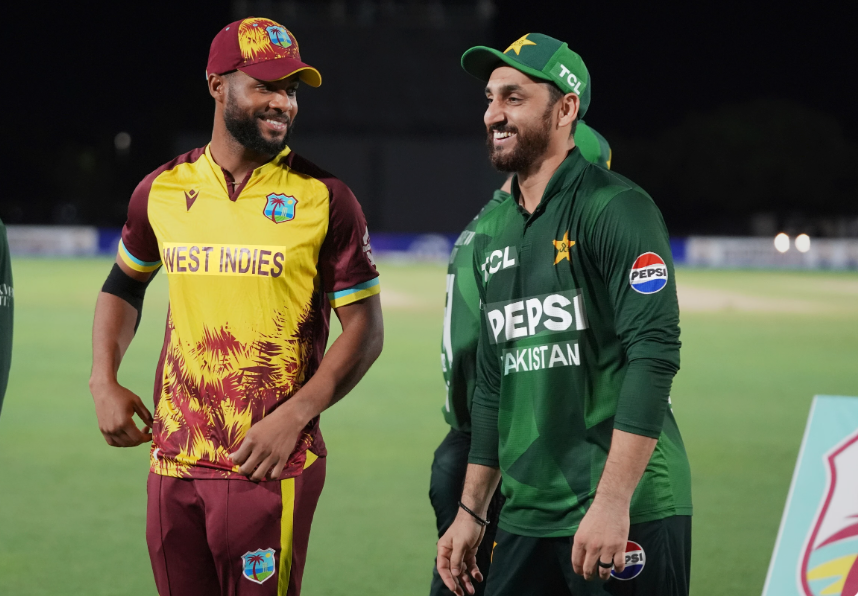
The rivalry between the two sides has always carried a unique blend of power, unpredictability, and competitive spirit. From their earliest meetings to modern day encounters, both teams have produced unforgettable cricket moments shaped by fast bowling attacks, explosive batting displays, and pressure driven performances. Each match has added a new chapter to their long timeline, where momentum often shifts within a few overs. Fans from both regions have witnessed dramatic finishes, tactical battles, and individual brilliance that define international cricket at its best. This rivalry continues to evolve, reflecting changing formats, new generations, and the ever increasing intensity of global cricket competition.
Latest Matches Table
Date
Format
Venue
Result
12 August 2025
ODI
Tarouba, Trinidad
West Indies won by 202 runs
10 August 2025
ODI
Tarouba, Trinidad
West Indies won by 5 wickets
8 August 2025
ODI
Tarouba, Trinidad
Pakistan won by 5 wickets
4 August 2025
T20I
Lauderhill, USA
Pakistan won by 13 runs
3 August 2025
T20I
Lauderhill, USA
West Indies won by 2 wickets
1 August 2025
T20I
Lauderhill, USA
Pakistan won by 14 runs
25 January 2025
Test
Multan, Pakistan
West Indies won by 120 runs
17 January 2025
Test
Multan, Pakistan
Pakistan won by 127 runs
All-Time Head-to-Head Record Table
Format
Total Matches
West Indies Wins
Pakistan Wins
Draws / No Result / Tied
Test Matches
54
22
19
13
One Day Internationals (ODI)
140
73
64
3
Twenty20 Internationals (T20I)
24
4
17
3
All-Time Batting Leaders Table
Batter
Team
Format
Matches
Total Runs
High Score
Average
Javed Miandad
Pakistan
Test / ODI
80
3381
114
44.48
Desmond Haynes
West Indies
Test / ODI
81
3217
184
42.89
Inzamam-ul-Haq
Pakistan
Test / ODI
63
2580
135
45.26
Brian Lara
West Indies
Test / ODI
54
2488
156
46.94
Richie Richardson
West Indies
Test / ODI
66
2470
122
41.16
Babar Azam
Pakistan
Combined
42
1985
123
49.62
All-Time Bowling Leaders Table
Bowler
Team
Format
Matches
Wickets
Best Bowling
Economy
Wasim Akram
Pakistan
Test / ODI
57
169
7/45
3.32
Curtly Ambrose
West Indies
Test / ODI
41
134
6/29
2.84
Waqar Younis
Pakistan
Test / ODI
40
118
6/22
3.65
Courtney Walsh
West Indies
Test / ODI
43
110
7/37
2.98
Imran Khan
Pakistan
Test / ODI
38
102
7/80
3.01
Malcolm Marshall
West Indies
Test / ODI
32
96
6/69
3.12
Rivalry Origins in Early International Cricket
The early encounters between the two sides created a strong foundation for a long competitive history. Both teams entered international cricket with completely different playing identities. One side depended on pace, aggression, and natural attacking instincts, while the other built its strength through unpredictable brilliance and disciplined bowling structure. When they first met, there was no modern analytics or heavy media pressure, but the intensity on the field was already visible. Each match became a learning experience, where players slowly understood each other’s strengths and weaknesses. The contests were often unpredictable, with momentum shifting quickly within sessions. Batting collapses, sudden partnerships, and impactful bowling spells shaped early outcomes. These games also helped both teams develop mutual respect over time. Even when results were one-sided, the competition always felt alive and meaningful, setting the tone for future decades of rivalry development in international cricket.
Year
Format
Venue
Key Moment
Result
1976
Test
Karachi
Pace dominated early spells
Draw
1977
Test
Kingston
Fast bowling pressure
West Indies win
1978
ODI
Lahore
Controlled chase finish
Pakistan win
1979
Test
Georgetown
Spin impact late innings
Draw
1980
ODI
Barbados
Lower order recovery
West Indies win
Early Test Battles and Growing Competitive Respect
Test matches between the two sides in the early phase were defined by patience, discipline, and long tactical battles. The Caribbean attack relied heavily on bounce and raw pace, testing every inch of technique from opposing batters. On the other hand, the Pakistani batting lineup focused on survival skills, footwork, and careful shot selection under pressure. Many matches stretched deep into five days, where every session brought new momentum shifts. Bowlers had to maintain consistency rather than rely on sudden breakthroughs. Batters who adapted to short-pitched bowling became crucial assets. Several matches ended in draws, but even those results carried strong competitive value due to intense phases of play. Both teams began studying each other’s patterns more deeply, adjusting strategies over time. This period created a silent but strong respect that shaped future contests between them in all formats of international cricket.
Year
Format
Venue
Key Moment
Result
1981
Test
Lahore
Spin resistance phase
Draw
1982
Test
Trinidad
Pace dominance spell
West Indies win
1983
Test
Karachi
Defensive batting effort
Draw
1984
Test
Barbados
Lower order impact
West Indies win
1985
Test
Multan
Long partnership stability
Draw
ODI Cricket Changing Match Dynamics
The introduction of limited overs cricket transformed how both teams approached each other. Matches became faster, more aggressive, and highly unpredictable. Batters were forced to increase scoring rates, while bowlers adapted with variations and strategic field placements. This format suited explosive talent on both sides, making contests more entertaining and result-oriented. Run chases became carefully calculated battles involving required rates and pressure management. Fielding also started influencing outcomes more strongly than before. Many matches went down to the final over, increasing excitement and emotional intensity. Individual performances became more decisive compared to long team-building innings. Momentum swings were frequent, and no team could feel safe until the last ball. This era marked a major shift in the rivalry, turning it into a global spectacle in white-ball cricket.
Year
Format
Venue
Key Moment
Result
1986
ODI
Sharjah
Late hitting finish
Pakistan win
1987
ODI
Bridgetown
Power hitting dominance
West Indies win
1988
ODI
Lahore
Tight bowling control
Pakistan win
1989
ODI
Georgetown
Middle order collapse
West Indies win
1990
ODI
Sharjah
Final over chase drama
Pakistan win
Peak Competitive Era of the 1980s
The 1980s represented one of the strongest phases for both teams, creating a highly competitive cricketing environment. The Caribbean side dominated world cricket with fearsome pace attacks and fearless batting depth, while the Pakistani team developed into a dangerous and unpredictable unit capable of defeating top opponents on any given day. Matches during this period were intense and often decided by individual brilliance rather than long-term dominance. Fast bowlers from both teams created constant pressure on batters, making survival a key challenge. Captains played a vital role in tactical decisions and field placements. Psychological pressure also became a major factor, as both sides tried to outthink each other. Fans witnessed iconic moments that defined careers and shaped cricketing legacies. Every encounter felt like a high-stakes battle, adding more intensity to an already competitive rivalry.
Year
Format
Venue
Key Moment
Result
1981
Test
Karachi
Fast bowling pressure spell
Draw
1982
ODI
Kingston
Aggressive chase finish
West Indies win
1983
Test
Lahore
Defensive resistance effort
Draw
1984
ODI
Barbados
Middle overs control
West Indies win
1985
ODI
Sharjah
Final over victory chase
Pakistan win
World Stage Encounters and Tournament Pressure
Global tournament meetings added a completely different level of pressure to the rivalry. ICC events demanded consistency, mental strength, and execution under extreme conditions. Matches were no longer just bilateral contests but survival battles in world competitions. Players often produced career-defining performances in these games. Scorecards reflected tight margins, shifting momentum, and high-pressure decision-making. Tactical planning, such as bowling rotations and batting order adjustments, played a major role. Crowd atmosphere in neutral venues still influenced energy levels on the field. Every mistake carried serious consequences, especially in knockout situations. These encounters helped define tournament journeys for both teams and added a global spotlight to their rivalry. The pressure of international events turned ordinary matches into unforgettable cricketing moments.
Year
Format
Venue
Key Moment
Result
1992
ODI
Brisbane
Pressure chase execution
Pakistan win
1996
ODI
Delhi
Batting collapse phase
West Indies win
1999
ODI
Leeds
Bowling control spell
Pakistan win
2003
ODI
Centurion
Big hitting innings
West Indies win
2007
ODI
Jamaica
Knockout match pressure
Pakistan win
Modern Era Transformation in Playing Style
Modern cricket brought a complete transformation in how both teams approached the game. The rise of T20 cricket changed batting intent, making aggression a constant requirement. Players became more athletic, and fielding standards improved significantly across both sides. Teams started relying heavily on data analysis and performance metrics to plan strategies. Bowlers developed new skills such as yorkers, slower deliveries, and tactical variations. Batting lineups became deeper, allowing more flexibility in chase scenarios. Matches turned faster, with higher scoring rates and frequent momentum shifts. Young players began taking central roles, often outperforming experienced names in key moments. This era emphasized adaptability and fast decision-making under pressure. The rivalry became more dynamic and unpredictable, reflecting modern cricket’s evolving nature.
Year
Format
Venue
Key Moment
Result
2011
T20
Dubai
Fast chase finish
West Indies win
2014
T20
Dhaka
Spin control victory
Pakistan win
2016
T20
Kolkata
Power hitting surge
West Indies win
2018
ODI
Karachi
Bowling dominance
Pakistan win
2021
T20
Abu Dhabi
Last over thriller
West Indies win
Current Balance and Future Direction
Recent encounters show that the rivalry has become far more balanced compared to earlier decades. Both teams now possess young and dynamic players capable of turning matches in short bursts. Batting depth, bowling variety, and fielding standards have improved significantly on both sides. Modern coaching systems and fitness programs have also raised overall performance levels. Matches are often closely contested, with no side holding long-term dominance. The unpredictability of outcomes continues to define this rivalry. Emerging players are expected to play a major role in shaping future results. Tactical evolution and adaptability will remain key factors moving forward. The rivalry continues to grow as one of the most competitive cross-continental matchups in international cricket.
Year
Format
Venue
Key Moment
Result
2022
ODI
Multan
Tight chase finish
Pakistan win
2023
T20
Tarouba
Late hitting impact
West Indies win
2024
ODI
Lahore
Bowling attack control
Pakistan win
2025
T20
Bridgetown
Balanced team effort
West Indies win
2026
ODI
Sharjah
Final overs thriller
Pakistan win
Conclusion
Over the decades, this rivalry has grown into one of the most engaging contests in international cricket history. What started as early experimental clashes has now become a balanced and highly competitive timeline filled with iconic performances and emotional moments. Both teams have contributed unforgettable matches across Tests, ODIs, and T20 formats, each leaving a lasting impact on cricket fans worldwide. From dominant spells to thrilling finishes, the journey reflects evolution, resilience, and constant adaptation. As new players emerge, the rivalry promises even more excitement in future encounters, continuing its legacy as a true showcase of international cricket excellence.