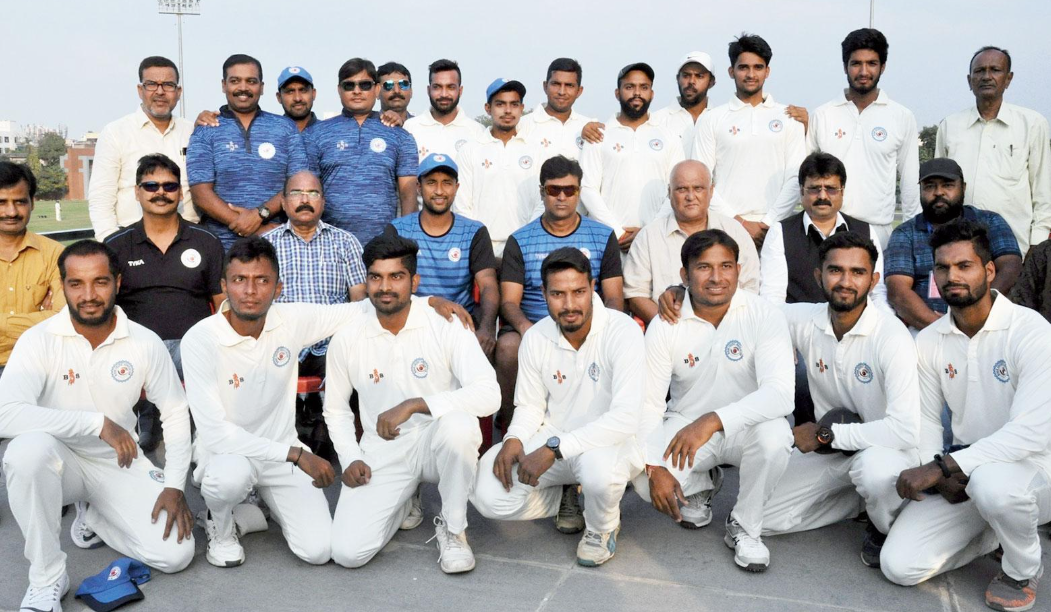
Cricket rivalries in Indian domestic circuits often grow from contrast rather than history, and this contest is no different. One side brings structure, experience, and tactical discipline shaped by years of competitive exposure, while the other represents a newer wave of ambition driven by fearless intent and rapid development. When these two teams meet, the match becomes more than just runs and wickets; it turns into a test of patience, adaptability, and mental strength. Every encounter adds a new layer to their evolving journey, where early dominance, sudden fightbacks, and shifting momentum define the narrative and keep fans deeply engaged throughout the contest.
Latest Matches Table
Date
Tournament
Venue
Winner
Margin
Format
22 Jan 2026
Ranji Trophy
Patna
Bihar
568 runs
First Class
06 Jan 2026
Vijay Hazare
Ranchi
Bihar
6 wickets
List A
26 Dec 2025
Vijay Hazare
Ranchi
Bihar
Match drawn
List A
08 Nov 2025
Ranji Trophy
Manipur
Manipur
5 wickets
First Class
25 Jan 2023
Ranji Trophy
Patna
Bihar
220 runs
First Class
10 Jan 2023
Ranji Trophy
Patna
Bihar
9 wickets
First Class
Team Statistics Summary Table
Team
Innings
Total Runs
Wickets Lost
Overs
Run Rate
Bihar
1st Innings
522
10
135.5
3.84
Manipur
1st Innings
264
10
89.1
2.96
Bihar
2nd Innings
505
6
119.3
4.22
Manipur
2nd Innings
195
10
56.1
3.47
Bihar
Historical Best
547
10
142.2
3.84
Manipur
Historical Best
324
10
105.4
3.07
Individual Batting Records Table
Player
Team
Innings
Runs
Balls
Fours
Sixes
Piyush Singh
Bihar
2nd
216
322
23
1
Bipin Saurabh
Bihar
1st
143
189
16
4
Sakibul Gani
Bihar
1st
108
155
11
2
Raghuvendra Pratap
Bihar
2nd
90
112
11
2
Ronald Longjam
Manipur
1st
79
211
10
0
Pheiroijam Jotin
Manipur
2nd
74
102
6
2
Individual Bowling Records Table
Player
Team
Overs
Maidens
Runs
Wickets
Economy
Rex Rajkumar
Manipur
32.0
6
117
4
3.65
Pheiroijam Jotin
Manipur
24.0
4
85
3
3.54
Suraj Kashyap
Bihar
16.1
3
34
3
2.10
Suraj Kashyap
Bihar
16.0
3
32
3
2.00
Himanshu Singh
Bihar
12.1
1
49
3
4.04
Prashant Singh
Bihar
26.0
4
60
2
2.30
Early Cricket Identity of the Two Domestic Teams
Cricket in the eastern and northeastern domestic circuit has grown through very different journeys, shaped by infrastructure, coaching depth, and exposure to competitive matches. One side represents a long-established cricketing culture with deep roots in India’s domestic system, where experienced players and structured academies have historically produced consistent performers. The other side represents a newer wave of talent, emerging from regions where cricket development has accelerated only in recent years. This contrast creates a fascinating balance of experience and raw ambition. In early domestic seasons, performances reflected this gap clearly, with one side showing stronger batting depth and match awareness, while the other displayed energy, unpredictability, and fearless intent. Over time, this difference started narrowing as younger players gained exposure through national tournaments. The early identity phase of both teams laid the foundation for competitive clashes, where one relied on stability and the other on aggressive improvisation, setting the tone for future encounters filled with learning and adaptation.
Team
Formation Era
Domestic Experience Level
Key Strength
Development Phase
Side A
Early Indian Domestic Era
High
Batting Stability
Established Structure
Side B
Recent Domestic Entry
Moderate
Fast Growth Talent
Emerging Phase
Side A
Long-Term System
High
Spin Depth
Mature Setup
Side B
Modern Expansion
Growing
Fast Bowlers
Developing Structure
Side A
Traditional Pathway
High
Consistency
Fully Developed
First Encounter in Domestic Competition
The first time these two sides faced each other in domestic cricket, expectations were already shaped by reputation and past performance history. One team entered the match with confidence built from years of structured competition, while the other arrived with enthusiasm and a desire to prove itself on a bigger stage. The match immediately highlighted differences in temperament and approach. Early overs were cautious, with both sides trying to read pitch conditions and opposition strategy. As the game progressed, one side began asserting control through disciplined bowling and steady partnerships, while the other struggled to maintain momentum during pressure phases. Despite the imbalance, there were moments of resistance that showed the potential for future improvement. Field placements, bowling rotations, and batting order decisions played a major role in shaping the flow of the game. That first encounter set the tone for all future meetings, building a foundation of respect mixed with competitive tension that continued to grow in later matches.
Match Phase
Dominant Side
Key Event
Impact Moment
Result Influence
Powerplay
Side A
Early Wickets
Pressure Build
Control Established
Middle Overs
Side A
Partnership Break
Momentum Shift
Advantage Gained
Middle Overs
Side B
Recovery Stand
Resistance
Temporary Stability
Death Overs
Side A
Tight Bowling
Run Restriction
Strong Finish
Final Stage
Side A
Field Pressure
Collapse Trigger
Match Decided
Experience Advantage and Tactical Discipline
Experience in domestic cricket often becomes the defining factor in matches where pressure situations demand clarity and composure. One side consistently demonstrated better game awareness, especially during middle overs where building pressure without conceding boundaries became a clear strategy. Their ability to rotate bowlers effectively and adjust field placements based on batter behavior gave them a tactical edge. Batters from this side showed patience, waiting for loose deliveries instead of forcing risky shots. On the other hand, the less experienced side relied more on instinct and aggressive intent, which worked in bursts but lacked consistency across longer phases of the innings. This difference in approach often decided match direction during crucial moments. Captaincy decisions played a vital role, especially in handling spin-heavy conditions and maintaining pressure during run chases. Over time, the gap in experience began to reduce, but early matches clearly showed how tactical discipline can dominate raw enthusiasm in competitive cricket environments.
Aspect
Team A Strength
Team B Challenge
Match Effect
Key Difference
Captaincy
Strong Planning
Reactive Decisions
Control Shift
Leadership Gap
Bowling Rotation
Balanced Use
Overdependence
Pressure Build
Strategy Depth
Batting Approach
Patience-Based
Aggressive Style
Stability Issue
Shot Selection
Field Setup
Adaptive
Static Phases
Run Control
Tactical Awareness
Game Reading
Advanced
Developing
Momentum Loss
Experience Factor
Emerging Confidence of the Developing Side
As domestic seasons progressed, the developing team began showing noticeable improvement in confidence and execution. Players who initially struggled under pressure started adapting to match situations more effectively. Batters began building partnerships instead of chasing quick runs, while bowlers learned to maintain tighter lines and lengths. This shift was particularly visible in matches where early setbacks no longer led to complete collapses. Coaching support and exposure to higher-level competition helped reshape their approach. The team also started experimenting with bowling combinations, introducing variation in pace and spin to disrupt opposition rhythm. Fielding standards improved, reducing easy runs and creating pressure through athletic saves and sharp throws. Although consistency remained a challenge, the growth trajectory was clearly visible. These improvements turned them from underperformers into genuine competitors capable of challenging stronger sides on their day, adding unpredictability to future encounters and making matches more competitive and engaging for spectators.
Improvement Area
Early Phase
Later Phase
Key Change
Match Impact
Batting
Risk Heavy
Balanced
Partnership Focus
Stability Gain
Bowling
Inconsistent
Structured
Line Discipline
Pressure Control
Fielding
Basic
Active
Athletic Saves
Run Reduction
Strategy
Simple
Adaptive
Match Awareness
Competitive Edge
Confidence
Low
Growing
Mental Strength
Performance Rise
Bowling Control and Match Turning Spells
Bowling has always played a decisive role in shaping outcomes between these sides, especially during middle and death overs. One side consistently relied on disciplined seam and spin combinations to control run flow, applying pressure through dot balls and tight field settings. Key bowlers delivered breakthrough spells at crucial moments, often changing match direction within a few overs. The other side initially struggled to counter disciplined bowling, especially when wickets fell in quick succession. However, over time, they developed counter-strategies such as aggressive shot selection against spin and rotating strike more efficiently. Despite this adaptation, controlling pressure overs remained a challenge. Match-defining spells often came from bowlers who maintained accuracy under pressure, forcing batters into mistakes. These spells not only reduced scoring rates but also created psychological pressure that led to collapses. Bowling thus became the central force in defining competitive balance between the two teams across multiple encounters.
Bowler Type
Team
Overs Impact
Key Spell Effect
Match Result Influence
Fast Bowler
Team A
Powerplay
Early Wickets
Strong Control
Spinner
Team A
Middle Overs
Run Restriction
Pressure Build
Medium Pace
Team B
Death Overs
Mixed Results
Partial Control
Spin Bowler
Team B
Middle Overs
Breakthrough Attempts
Limited Success
All Rounder
Team A
Flexible Overs
Game Shift
Major Impact
Batting Pressure and Partnership Building
Batting performances between these two sides have often been defined by partnerships rather than individual brilliance alone. One side regularly built long, stable stands that allowed them to post competitive totals or chase targets comfortably. Their batters focused on rotating strike and minimizing dot balls, which kept scoreboard pressure under control. In contrast, the opposing side relied heavily on individual aggressive innings that sometimes produced quick runs but lacked long-term stability. When partnerships failed to develop, pressure mounted quickly, leading to collapses under disciplined bowling attacks. Over time, both sides learned from each other, with one incorporating more aggressive intent and the other emphasizing patience. This evolution made later matches more balanced and unpredictable. Key partnerships often determined the final outcome, especially in matches where pitch conditions favored bowlers. Batting thus became a psychological battle as much as a technical one, shaping the rhythm and outcome of contests between the two teams.
Partnership Stage
Team A Pattern
Team B Pattern
Outcome Effect
Key Insight
Opening Stand
Stable Start
Aggressive Start
Early Balance
Risk vs Control
Middle Overs
Strong Build
Inconsistent
Momentum Shift
Stability Factor
Recovery Phase
Calm Rebuild
Pressure Loss
Collapse Risk
Mental Strength
Acceleration
Controlled Hit
Forced Shots
Score Variation
Shot Selection
Final Overs
Planned Finish
Panic Phase
Result Impact
Execution Quality
Tactical Approaches and Match Strategy Evolution
Tactical evolution has been one of the most interesting aspects of matches between these sides. One team traditionally followed structured game plans, focusing on data-driven decisions and consistent execution. Their strategy revolved around building pressure through disciplined bowling and calculated batting progression. The other team initially relied on instinct-based decisions, which brought occasional success but lacked sustainability. Over time, exposure to competitive matches forced tactical refinement. Field placements became more dynamic, bowling changes more strategic, and batting orders more flexible. Captains on both sides started adapting mid-match strategies based on pitch behavior and opposition momentum. This tactical shift significantly increased competitiveness in later encounters. Matches became less predictable and more dependent on real-time decision-making. The evolution of strategy transformed the rivalry into a balanced contest where planning and adaptability played equally important roles in determining outcomes.
Tactical Area
Team A Approach
Team B Approach
Evolution Change
Match Influence
Field Setup
Structured
Adaptive Learning
Balanced System
Pressure Control
Bowling Plan
Data Based
Flexible Trial
Improved Strategy
Wicket Creation
Batting Order
Fixed Roles
Experimental
Role Clarity
Stability Growth
Captaincy
Analytical
Reactive to Situations
Decision Growth
Match Flow Control
Game Adjustment
Planned
Improving
Tactical Maturity
Competitive Balance
Conclusion
Over time, this rivalry has transformed into a competitive and evolving cricketing story rather than a one-sided affair. What began as a mismatch between experience and emerging talent has gradually developed into a balanced contest filled with learning moments for both sides. Each match reflects tactical growth, improved skills, and stronger mental resilience. The scorecards now show closer battles, with key performances from both batting and bowling units shaping results. This ongoing progression highlights how domestic cricket continues to produce compelling matchups where determination and development matter as much as experience and tradition in defining outcomes.